Earlier this year I had the privilege of speaking at the 24th Annual River Restoration Northwest (RRNW) Symposium in Stevenson, Washington. With over 450 people attending in person and a further 115 joining online, it was the largest conference I’ve ever presented at and one of the most thought provoking.
The conference brought together river restoration practitioners, geomorphologists, ecologists, Indigenous leaders, engineers and policymakers from across North America. What I took away was not a single “silver bullet” technique, but a powerful reframing of how we think about rivers: not as systems to be controlled, but as living, evolving landscapes that we must learn to work with, not against.
The lessons I learned – technical, cultural and philosophical – feel very relevant to the challenges we face in the UK.
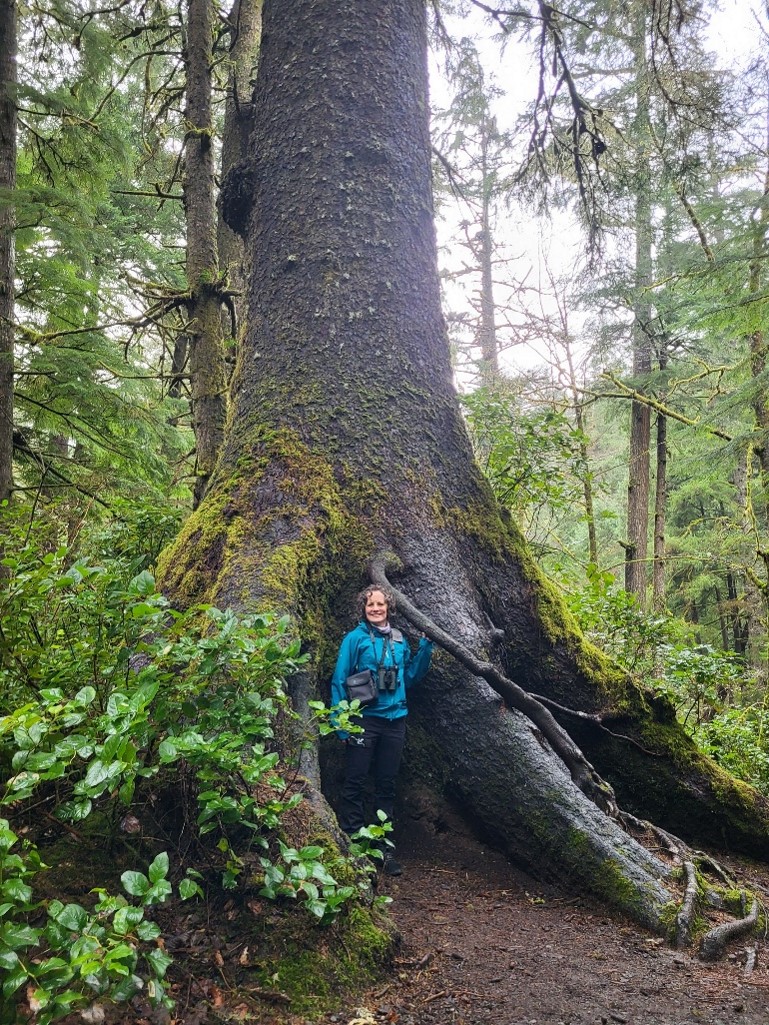
Picture of the author in old growth temperate rainforest in Pacific Northwest (Source: Lydia Burgess-Gamble)
Why the UK perspective matters
I was invited to present because of my background in river restoration and nature based solutions, shaped through academic research, almost two decades at the Environment Agency, and now through my role at Southern Water leading Biodiversity Net Gain strategy. I’ve also had the opportunity to work internationally with the US Army Corps of Engineers on global guidance for nature based solutions.
But timing also mattered. Funding for river restoration in the USA is becoming increasingly uncertain. In that context, England’s experience of delivering nature based solutions in densely populated, heavily modified landscape was seen to be highly relevant. The message I was asked to share was not that the UK has all the answers, but that workable solutions are possible even where space is limited and trade offs are complex. In the UK we also have multiple different funding sources for NBS which the delegates at this symposium were interested in.
Flooding, drought and biodiversity: joined up challenges
In my keynote, I focused on three interlinked challenges that are familiar in the UK: flood risk, drought and biodiversity loss.
England now has around 9 million properties at risk of flooding, and that number will continue to grow. Our early responses focused on stopping, defending, removing and conveying water. Over the past two decades, this has shifted toward protecting, restoring and emulating natural processes - working with natural processes rather than against it.
Projects such as the Holnicote Estate Stage 0 restoration in Somerset demonstrate what is possible at scale. Floodplain reconnection and the addition of thousands of tonnes of wood delivered a 38% reduction in peak flows, raised groundwater levels by several feet, and created a resilient, multi benefit landscape. These are outcomes that grey infrastructure simply cannot replicate.
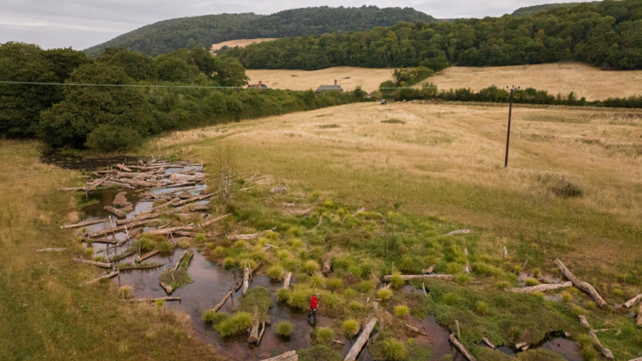
Selworthy Stage 0 River Restoration, Holnicote Estate (Source: National Trust)
Drought presents an equally pressing challenge, particularly in the south east. Chalk streams, sometimes described as England’s “hidden rainforests”, are globally rare and extremely sensitive to abstraction and drought conditions. Using the Lukely Brook river restoration project on the Isle of Wight as an example I showed how reconnecting rivers to their floodplains can help retain water in the landscape, improve habitat, support amenity and potentially stabilise groundwater levels.
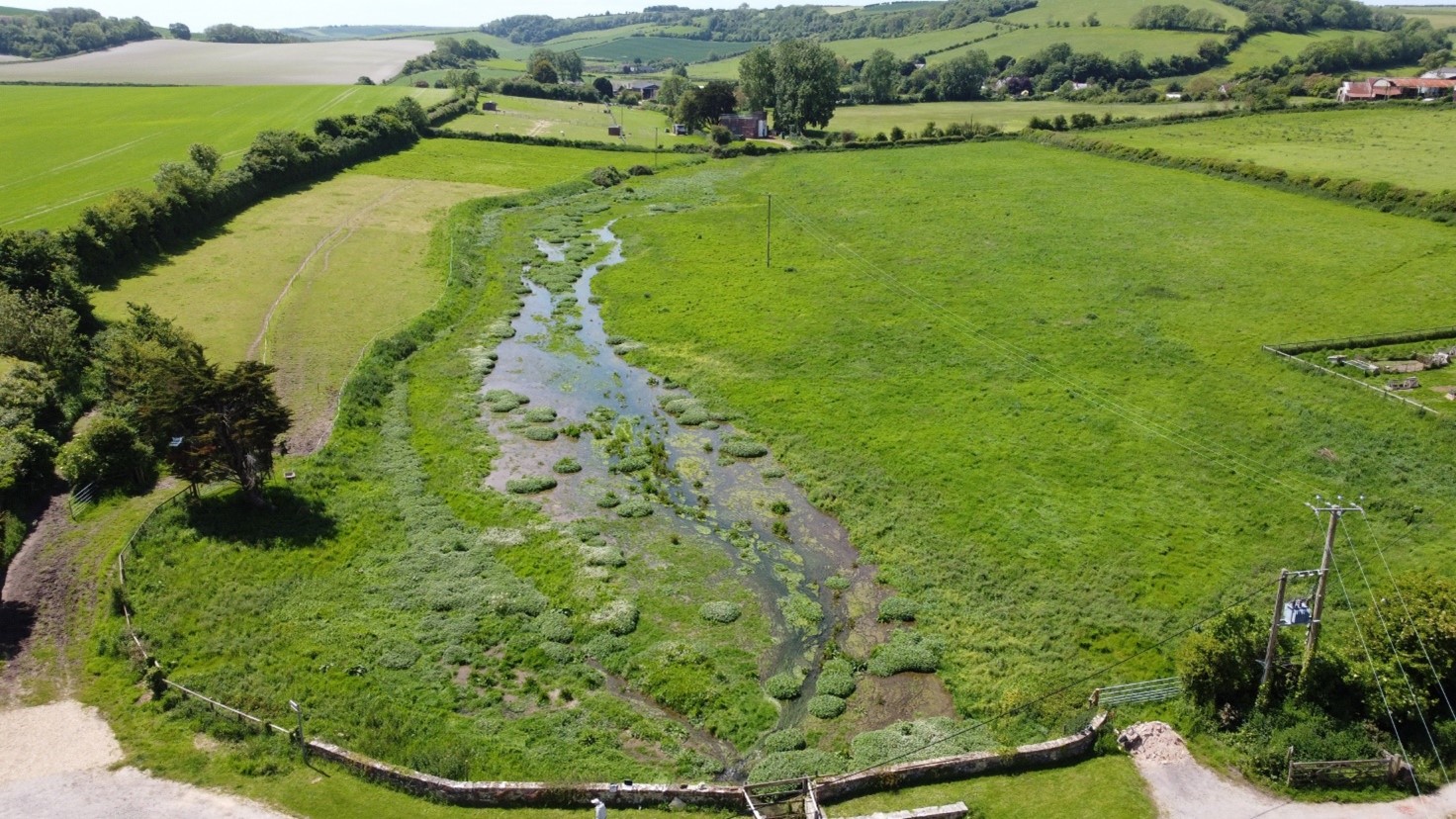
Lukely Brook river restoration projects, Isle of Wight (Source: Southern Water)
Biodiversity loss is the backdrop to everything. The UK is one of the most nature depleted countries globally. The Lower Otter Restoration Project in Devon illustrates what is possible when we give rivers space again. By breaching embankments and allowing tidal water back onto the floodplain, the project has created an intertidal wetland that supports birds, acts as a fish nursery, stores carbon, adapts to sea level rise, and has become a cherished local place. In many cases, simply adding water brings nature back.
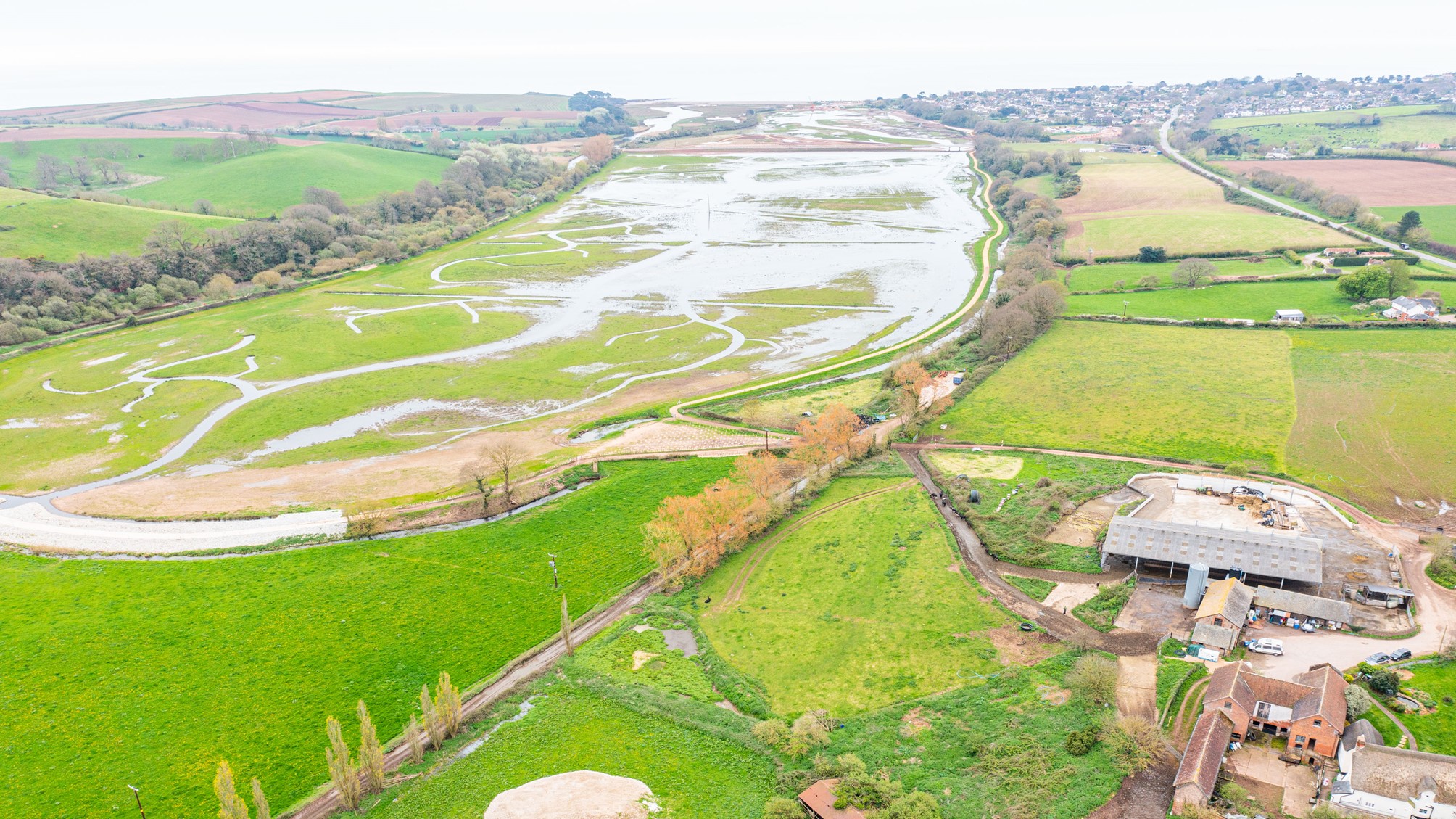
Lower Otter Restoration Project, Devon (Source: Clinton Devon Estate)
Designing for how rivers want to behave
A recurring theme throughout the conference was the importance of understanding a river’s evolutionary strategy to help plan and design river restoration projects.
The projects presented at the RRNW symposium were very different to those found in the UK. They seem to be delivered at a much larger scale, a large volume of woody material is used to reconnect the river to its floodplain creating a braded channel form.
The Stage 0 approach to river restoration is increasingly being adopted on projects across the UK, helping to initiate the restoration of natural processes.
In the USA wood is absolutely fundamental to the delivery of this Stage 0 approach, one delegate at the symposium referred to this approach as “putting the forest back into the river”.
Transferring the Stage 0 approach to the UK takes some adaptation, we don’t have as much ready access to wood for use in our restoration projects. However, wood is vitally important because it creates roughness, slows flows, traps sediment, drives channel evolution and creates a diverse mosaic of habitats. Restoration practitioners in the UK are finding alternatives to the use of woody – for example live willow and willow hurdles are being used on some sites where access to large wood is limited.
The Environment Agency’s Stage 0 river restoration expert Matt Parr said in a recent social merit post ‘We owe rivers and the life they support due diligence. Our designs should focus on enabling self rehabilitation, not locking systems into rigid forms.’
Over time it will be interesting to see how Stage 0 restoration is implemented in the UK, with the initial inspiration taken from the Pacific Northwest and adapted to suit the watersheds of the UK.
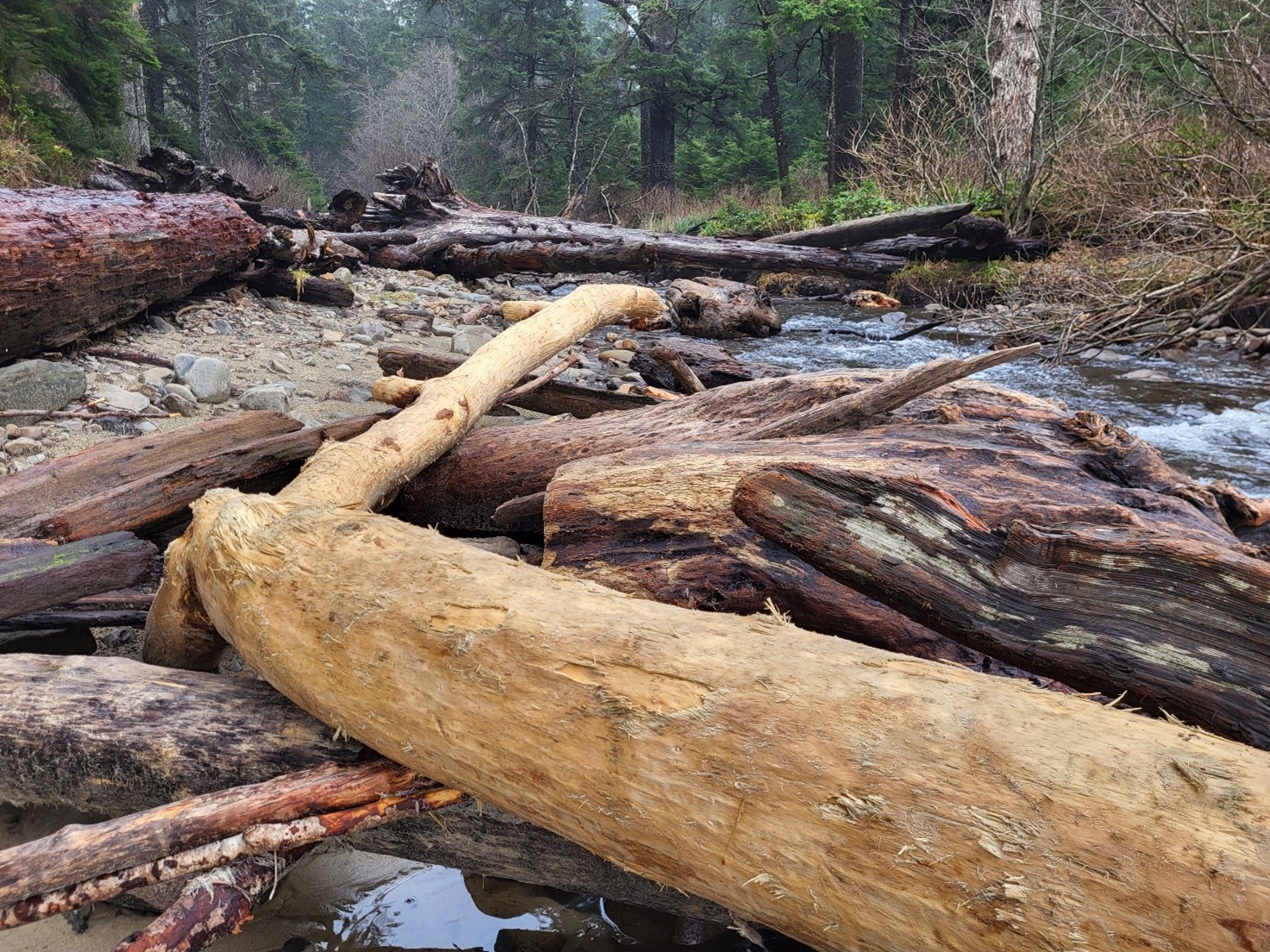
Picture woody material in Oswald State Park, Smugglers Cove (Source: Lydia Burgess-Gamble)
Beavers, wildfire and keystone species
One of the most striking presentations came from Emily Fairfax, whose research explores the role of beavers in wildfire resilience. Beaver dams create wetlands that store water, raise groundwater tables and maintain green corridors through dry landscapes.
In wildfire prone regions, these wetlands act as natural fire breaks and refugia, protecting vegetation and providing safe havens for wildlife. Delegates at the symposium told me that wildfire suppression in urban areas in the USA relies on water mixed with chemicals such as PFAS, which may over time have negative health and environmental impacts.
Historic beaver populations once reshaped river networks across North America, creating wetlands at a continental scale. Today’s depleted populations mean reduced resilience to flood, drought and fire. With around 7% of UK homes already at risk from wildfire, reintroducing keystone species like beavers may be critical to future landscape resilience, not just biodiversity recovery.
Nature based solutions strengthen over time
I was also really interested to hear David Skuodas’s examples of delivering river restoration projects in highly urban environments where limited space is available. He talked about how traditional hard-engineered defences weaken over time and require escalating levels of maintenance or replacement which can be high cost. Nature Based Solutions, by contrast, tend to strengthen over time as ecosystems mature, delivering increasing benefits for flood risk, water quality, biodiversity and carbon storage.
The lesson repeated throughout the conference was that river restoration should not be viewed as a niche environmental intervention, it is critical in helping us address the twin climate and biodiversity crisis.
Learning about first nation stewardship
It was really interesting to hear presentations from first nation tribes at the symposium, where it was stated that stewardship decisions are made with the next seven generations in mind. This level of inter-generational knowledge of the natural environment does not exist in the UK, it was clear at the symposium that first national knowledge is invaluable in shaping how rivers and their watershed are restored.Colonisation forcibly removed Indigenous peoples from their lands, dismantling long standing stewardship systems. Logging, mining, damming and overfishing have left deep ecological scars. However, it became apparent that today, first nation tribes are starting to buy back land, restoring rivers, and re establishing governance systems rooted in cultural, ecological and spiritual connection.
One phrase stayed with me: “It can only be heard if it is told.” Long term oral history and lived experience offer insights that technical assessments alone cannot provide. There are clear parallels with the need to value local knowledge and community connection in river restoration closer to home in the UK.
Bringing the lessons back to the UK
Across projects, geographies and cultures, the key messages were remarkably consistent:
Perhaps most importantly, there was a shared understanding that rivers are dynamic, messy and sometimes unpredictable. Designing for flexibility, uncertainty and self healing is not a weakness – it is essential due diligence to help our watersheds adapt to and become more resilient to the impacts of climate change.
The UK faces increasing flood risk, more frequent droughts and accelerating biodiversity loss. Conferences such as the RRNW are invaluable in that they enable the sharing of best practice internationally.
References
All the RRNW presentations referenced here can be found at: Symposium - YouTube All the references used in my key note speech can be found here: